

Tips & Tricks for More Eco-Friendly Baking
Being a green home baker doesn’t just happen in the kitchen. While that is a big part of baking responsibly, a more holistic approach is needed, affecting what you buy, what you do with waste, and even educating fellow bakers.

1. Batch Baking
Heating your oven and keeping it running for extended amounts of time uses up a lot of energy. By batch baking–that is, baking multiple recipes in one session–you can minimize the time that your oven is turned on. That means you’ll save energy and even lower your power bill.
2. Reuse & Recycle
Anytime you can reduce waste in the kitchen, that’s a win for Mother Earth. Trade tray liners and cupcake liners made of paper for reusable silicone versions. And be sure to toss recyclable products, like the C&H® Sugar Premium Pure Cane Granulated Sugar Easy Baking Tub, in the bin when they’re done. Consult the How2Recycle icons on this and other recyclable product packaging for more info.

3. Bake from Scratch
Another way to reduce waste in the kitchen is to ignore the pre-packaged baked goods at your local grocery store and bake from scratch instead. You’re saving a box and plastic packaging from going into the trash when you do this. Plus, we just think scratch-made treats taste better when you know exactly what’s going into them.
4. Preheat Mindfully
Most recipes you encounter will require your oven to be preheated. It can be easy to just set it and forget it, with a fully heated oven sitting for hours. A more environmentally friendly approach to baking minimizes your oven’s bake time, resulting in less energy used. To be more mindful, turn your oven on to preheat, and as soon as it’s up to temperature, place your dough or batter in, then pull it out when it’s done and turn off your oven.

5. Buy in Bulk
Another effective way to reduce packaging waste is to buy in bulk whenever possible. That way, you’ll have one bigger package of an ingredient as opposed to more smaller ones. Luckily, buying in bulk often ends up costing a little less in the long run. But be careful, because it can be easy to forget about these items and they can go bad before you use them all up.
6. Reuse Parchment Paper
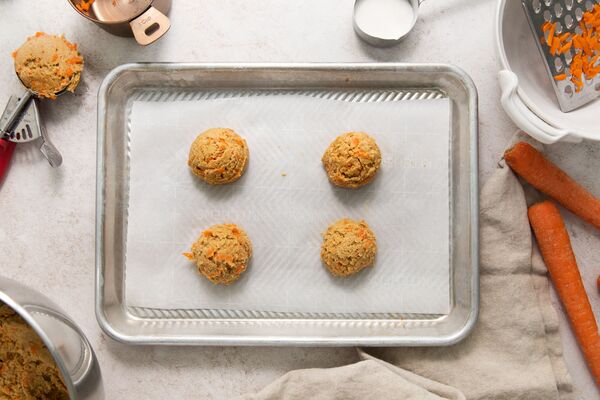
Parchment paper can be super handy–it ensures your delicious, fresh-baked goods won’t stick to the tray while also protecting it from wear and tear. If you need to use up your parchment paper before switching to a silicone version, get a little more mileage out of them by reusing them whenever possible. These sheets are surprisingly tough and shouldn’t have a problem handling several uses.
7. Educate Others
Once you incorporate these tips into your baking, the next step is to share these green baking practices with other home bakers whenever possible. Then hopefully they’ll pass them on to their friends and so on. Discussing important topics like this is the first step in enacting change.
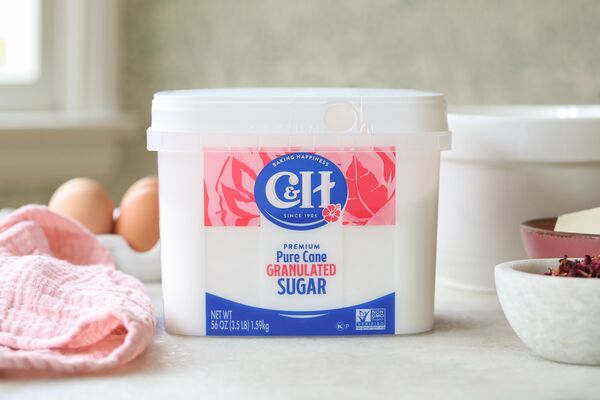
C&H® Sugar Premium Pure Cane Granulated Sugar Easy Baking Tub
The first step in adopting more eco-friendly baking practices is to pick up our Easy Baking Tub. Not only is the packaging reusable and recyclable, but it uses 28% less plastic and has 21% less carbon footprint than our previous round canister.