

Categories: Cakes & Cupcakes / baking / dessert / everyday baking
Dive into the difference between white, yellow, and chocolate cake, and how the ingredients in the cakes affect their outcome. First, we’re going to look at what key ingredients are responsible for creating each signature cake type, and their applications. Then, we’re going to look at how much ultrafine C&H® Baker's Sugar™ improves your cake texture over regular C&H® Granulated Sugar due to the smaller sugar crystals.
White Cake
White cakes are characterized with a pale white color and have an airy, fluffy light texture. This type of cake is made without egg yolks, using only the whites. Egg whites are high in protein and moisture, creating a fluffy, lighter texture.
Flour: In order to keep the texture extra soft, most white cake recipes call for cake flour. Cake flour has a lower gluten content than all-purpose flour, resulting in less gluten development when mixing the batter. Moisture activates gluten, and white cake has a high moisture batter because of the high quantity of egg whites; egg whites are 90% water compared to egg yolks which are only 50% water. If you use all-purpose flour, you risk developing too much gluten which can result in a gummy, dense cake.
Sugar: White cake typically has white sugar, to allow the cake to remain as light as possible. I’ve tested two different types of sugar – pure cane granulated sugar and ultrafine C&H® Baker's Sugar™. Keep reading for the full analysis and how much of a difference sugar can make to your cake structure!
Fats: You may find that white cake commonly uses oil as the type of fat, or some oil and some butter. Vegetable oil keeps the batter very pale, and is the most efficient form of fat as it’s 100% fat compared to butter which can be 90-95% fat. Egg whites are very lean so it helps make up for the missing fat in the yolks.
Flavoring white cake: In order to keep white cake as pale as possible, most recipes opt for imitation vanilla extract. There are lots of cake flavors that use white cake as their base! For example, a classic white wedding cake adds almond extract for that signature “wedding cake-esque” flavor. Another popular version is Confetti cake or Birthday cake, it’s white cake with the addition of sprinkles! Lastly, strawberry cake is typically made using a white cake base, with freeze dried strawberries added for a vibrant, real, strawberry flavor. The white cake base allows the naturally occurring strawberry flavor and color to really shine.
Yellow Cake
The main difference between yellow and white cake is that yellow cake includes egg yolks in the batter. This results in a richer cake with a dense, yellow crumb that melts in your mouth and is ultra buttery. Yellow cake often has whole eggs, and may include adding extra yolks for a brighter yellow color and a rich texture. The yellow color and level of richness will depend on whether you opt for whole eggs in the recipe or whole eggs with additional yolks. As a result, there’s a pretty wide acceptable range for what can be classified as a yellow cake.
Flour: You’re going to find that the type of flour used in yellow cake can vary recipe to recipe. Some recipes, like this zesty lemon cake, use cake flour while other recipes like meringue smothered rum cake use all purpose flour. Yellow cake is more forgiving when it comes to the type of flour used due to the higher fat to lower moisture content that helps to inhibit gluten from overdeveloping when mixing. This ensures a fluffy cake no matter which flour you use.
Sugar: Yellow cake typically uses white sugar, but you can find some spiced variations that use a mixture of white and light brown sugar. For example, this moist carrot cake. I’ve tested two different types of sugar – pure cane granulated sugar and ultrafine C&H® Baker's Sugar™ at the end of this article.
Fats: Butter is the main, most popular form of fat in yellow cake. It’s flavorful, rich, and also yellow in color. You may find that some yellow cakes also use a mixture of butter and oil – the oil helps to keep the cake soft even when it’s right out of the fridge.
Flavorings: Yellow cake almost always has vanilla extract to give it a strong vanilla flavor. Pure vanilla extract is commonly used because you’re not worried about affecting the pure white color, like you may be with white cake. Lemon cake is a popular version of yellow cake because the yellow egg yolks really complement the color of the cake and lemon flavor. Boston cream pie is also a form of yellow cake. You can frequently find yellow cake frosted with chocolate frosting for a decadent, rich cake with both vanilla and chocolate flavors! Or layered with whipped cream and berries for a quick summer treat.
Chocolate Cake
A classic, for good reason! Chocolate cakes can vary in texture from fluffy to dense, but its rich chocolate flavor and dark brown/black flavor is a constant across the board. Decadent, bold, rich, and never ceases to satisfy that chocolate shaped hole in your heart.
Flour: All-purpose flour is the most common flour used in chocolate cake. Cocoa powder makes chocolate cake really light and fluffy due to its lack of gluten, so you can use all-purpose flour and still create a light and fluffy cake.
Sugar: Chocolate cake commonly uses white sugar, and can use both white and brown sugar. This is entirely up to the recipe and the baker. Keep reading below to see a side by side comparison on why you should use ultrafine C&H® Baker's Sugar™ over regular granulated sugar!
Fats: Oil is most commonly used for chocolate cake because it creates a plush, spongier cake texture than if you were to use butter. Since chocolate is an overpowering flavor, you wouldn’t be able to really taste the butter in the cake if you used it. That’s why most bakers prefer oil in chocolate cake. Some chocolate cakes also have melted chocolate inside which creates an even richer chocolate cake.
Flavorings: Chocolate cake is flavored with cocoa powder which gives it an intense chocolate flavor. You can amplify the chocolate flavor by adding coffee or espresso into the batter – like this classic decadent chocolate cake. It’s also common to add pure vanilla extract to give the chocolate cake vanilla undertones. Or try salted caramel for a salted caramel chocolate cake.
Cake-xceptions: What about red velvet and carrot cake?
You may be wondering where cakes like red velvet cake and carrot cake fall in line on the cake spectrum?
Well, red velvet cake is a variation of chocolate cake except it has far less cocoa powder and has an extra punch of vinegar and a dash of red food coloring for that signature red color. Classically, it uses buttermilk for a light and fluffy texture!
Carrot cake is a spice cake; a variation on yellow cake, but with a few extra additions like spices and brown sugar. Brown sugar gives spice cakes a warm, caramelized, molasses flavor. Carrot cake also has loads of mix-ins like carrots, pineapples, and nuts. Another twist is this popular hummingbird cake which is a banana, pineapple, and pecan loaded spin on a classic spice cake.
What is Vanilla Cake?
Technically speaking, both white and yellow cake can be vanilla cake if they’re flavored with vanilla. It really depends on what kind of vanilla cake you’re used to seeing and enjoying!
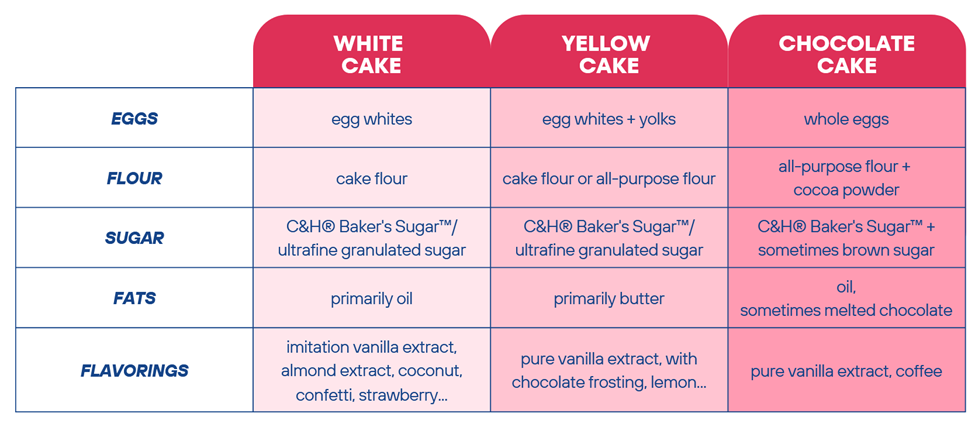
Here's a handy reference chart with all of the cake differences, summarized:
C&H® Baker's Sugar™ vs Regular Granulated Sugar for Baking
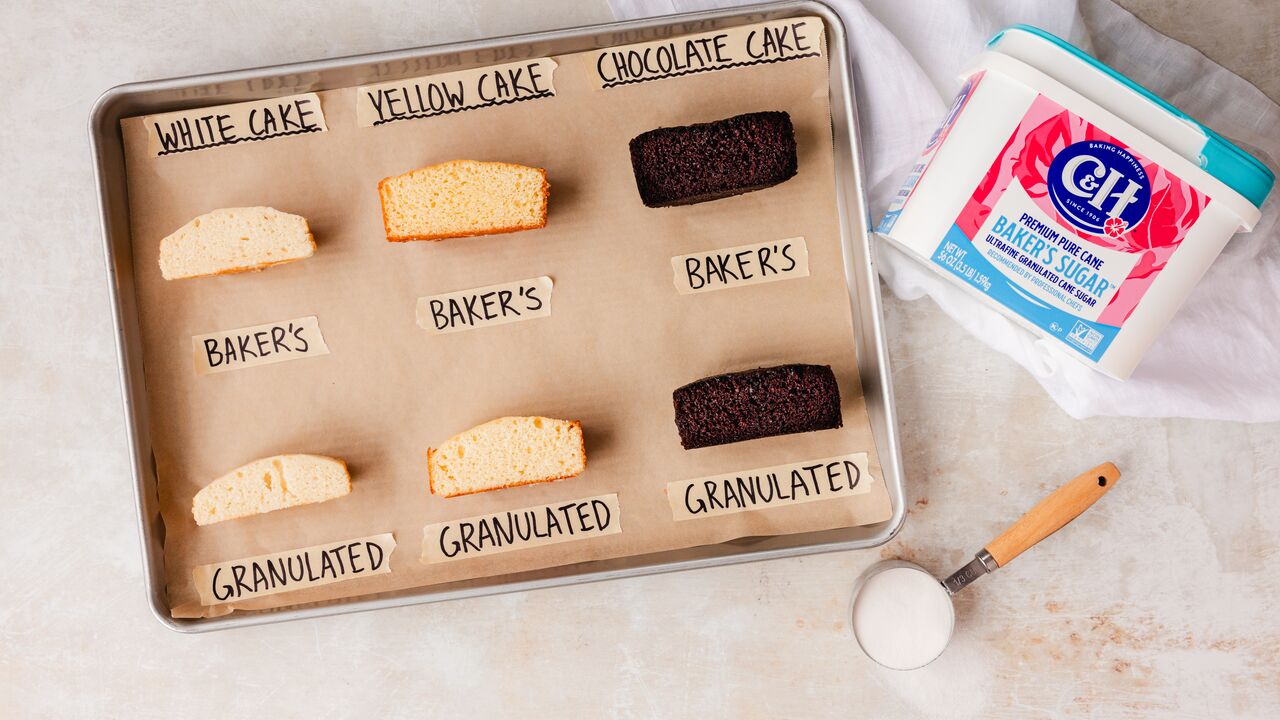
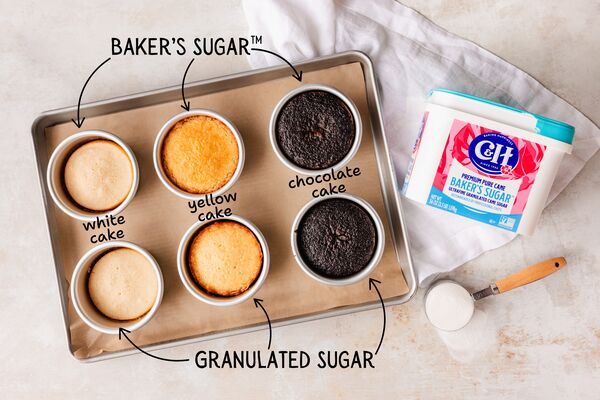
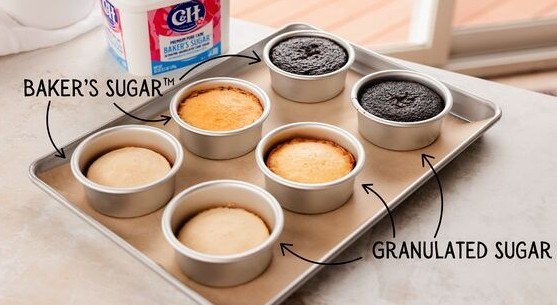
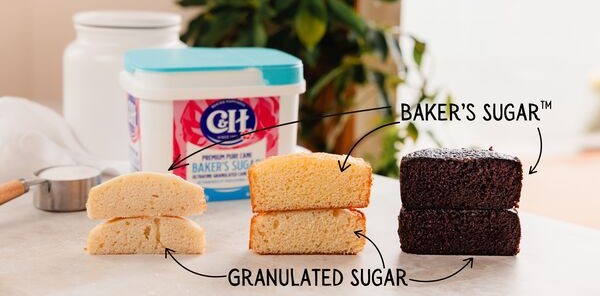
Not all sugars are created equal. The visual difference between brown, granulated, and powdered sugar can be quite obvious. But what about the difference between regular granulated cane sugar and C&H® Baker's Sugar™ - an ultrafine granulated sugar specially formulated for cakes and baking? Well, let’s find out! I tested white cake, yellow cake, and chocolate cake with granulated cane sugar and C&H® Baker's Sugar™ to test and compare the results.
C&H® Baker's Sugar™ is an ultrafine granulated sugar, allowing it to dissolve and blend faster and easier into cake batter. More, smaller grains of sugar allow for a more efficient creaming process since there are more grains of sugar per volume. This incorporates smaller air pockets at a faster pace than regular granulated sugar, creating a more even crumb with more lift and a lighter texture.
Since C&H® Baker's Sugar™ dissolves faster into batter, you’re left with a more even cake crumb than if you were to use granulated sugar. You also avoid that sugary crust that can occur when sugar doesn’t completely dissolve into your batter. Ultrafine sugar contributes more even cake browning during baking, and an even, moist texture because of the even sugar distribution.
C&H® Baker's Sugar™ has been designed to be a direct, 1:1 replacement for regular white sugar so it’s so convenient to use!
What we are going to look at:
- Crumb: evenness, moisture, tenderness, and the size of the air pockets.
- Rise: how much the cakes rose in the oven.
- Browning: evenness and the level of browning.
The recipes used:
- White Cake based on C&H® Birthday Cake recipe without the sprinkles
- Yellow Cake based on C&H® Lemon Cake recipe
- Chocolate Cake based on C&H® Decadent Chocolate Cake Recipe
For consistent results, each pair of cakes were baked together in a preheated, gas fueled oven. I used 4” buttered aluminum cake pans, and lined the bottoms with parchment paper. The cake batter was portioned, equally, by weight into the cake pans.
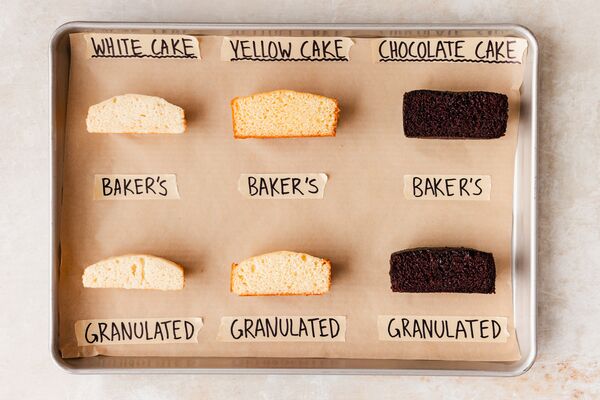
- White Cake: Baker's Sugar™ resulted in a cake with significantly more rise, a larger quantity of smaller air bubbles, and less tunneling (uneven, large air pockets) than the cake made with granulated sugar. The texture was softer and more moist with Baker's Sugar™. Both types of sugar resulted in cakes with similar, minimal browning.
- Yellow Cake: The cake made using Baker's Sugar™ had more even browning on the top and sides than the cake made with granulated sugar. The Baker's Sugar™ cake crumb was finer due to smaller, more even air bubbles. The granulated sugar cake had a significantly higher quantity of larger, uneven air pockets. Lastly, but most sought after, Baker's Sugar™ resulted in a cake with more lift and less doming than the granulated sugar cake. A more level top = less trimming before decorating, resulting in less cake loss/waste!
- Chocolate Cake: While both the granulated sugar and Baker's Sugar™ cakes had a similar appearance, the Baker's Sugar™ version had slightly more rise and finer crumb. The differences were more subtle with the chocolate cake compared to the white and yellow cakes due to the lack of creaming during the batter’s mixing process. The chocolate cake mouthfeel made using Baker's Sugar™ was lighter and had a more “melt in your mouth” quality.
Overall, Baker's Sugar™ resulted in a lighter cake texture with more, finer air pockets that yielded better lift and rise than regular granulated cane sugar. Even when the creaming process isn’t involved (as in the chocolate cake), Baker's Sugar™ dissolved into the batter fully creating an even, moist texture with better flavor. This had to do with the ultrafine texture of Baker's Sugar™, specifically formulated for bakers to improve cake texture, and flavor.
Recipe by
Mary
@flouringkitchen
Hi, my name is Mary, and I am the baker, recipe developer, and food photographer behind the blog Flouring Kitchen. I specialize in decadent desserts and savory pastries made easy for the home baker. My viewers and I especially love all the gooey, tangy lemon desserts as well as rich chocolate desserts. I'm most passionate about creating cinematic, mouthwatering recipe reels and videos. In my spare time, I love to read and knit.